Insurance Agency Answering Service
Quote shoppers call the next agency on the list, and a claim call at 9 PM is the moment a client decides if you're worth keeping. Here's what an insurance agency answering service should do, where the licensing line sits, and how to choose one.

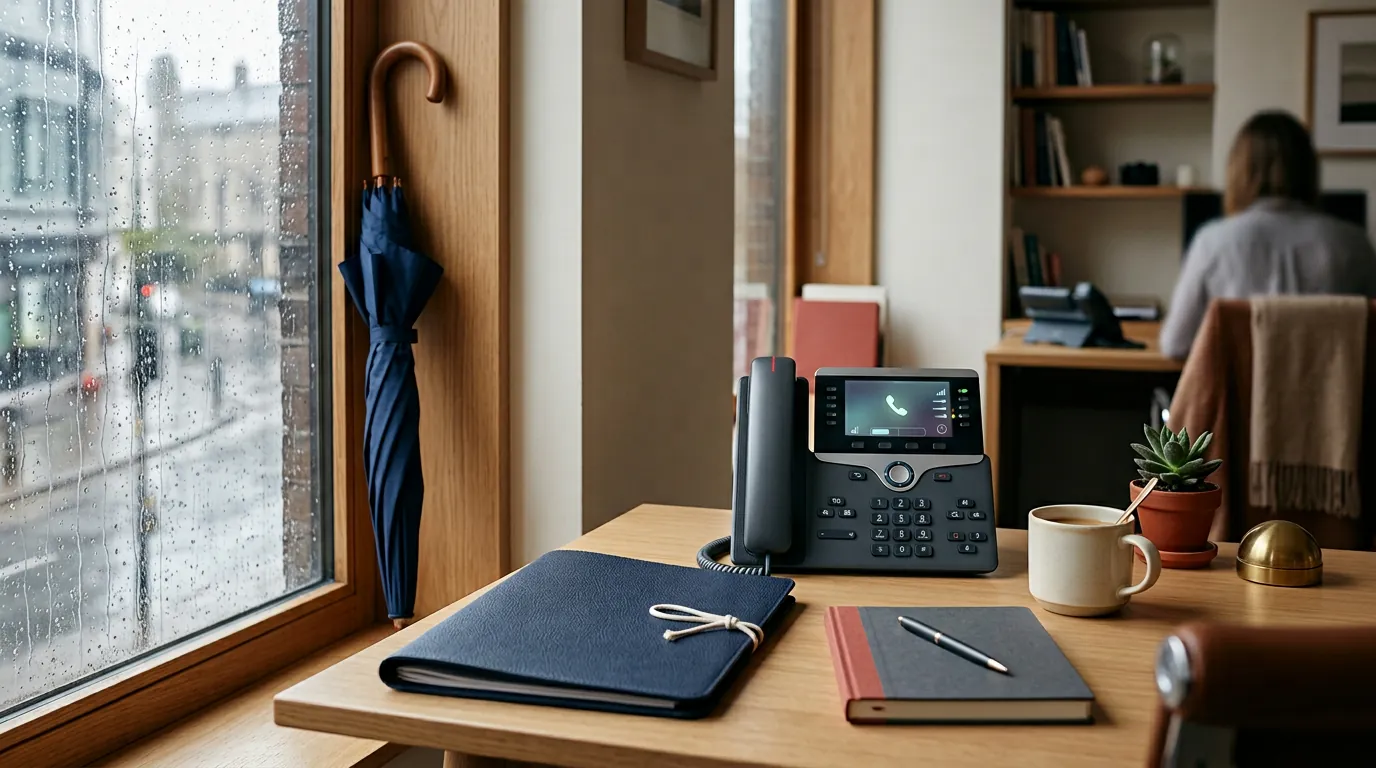
An insurance agency answering service picks up your agency's calls when your team can't, so a quote shopper, a client with a fender-bender, or someone who needs proof of insurance gets a real answer instead of voicemail. A good one answers 24/7, sorts quotes from claims from service work, takes complete details without crossing into licensed advice, and gets urgent calls to you fast. Below: the calls agencies get, the line a service must never cross, your options, and a checklist.
Why the phone still matters so much for agencies
Agencies still live on the phone. In the Big "I" and Future One 2026 Agency Universe Study, 86% of agents said they prefer customer service to go through their agency by phone or other non-online methods. Agencies were comfortable sending people online for documents and billing, but not for quotes or buying policies. Those are the calls that make you money.
- People are shopping. J.D. Power's 2025 U.S. Insurance Shopping Study found the share of customers shopping for insurance year over year jumped to 57% from 49%, the highest in the study's 19-year history. A shopper with three agencies on a list calls the next one if you don't pick up.
- Bundles keep clients longer. The same study found customers who bundle auto and home stay 7 years on average versus 5.5 for those who don't. Every answered quote call is a shot at a multi-line, multi-year client.
- Staffing is tight. The 2026 Agency Universe Study listed finding and screening job candidates as agencies' top challenge, at 45%. The average agency has about 10 people, and someone is always at lunch, out with a client, or on another line.
The calls an insurance agency actually gets
Not every call is equal. Here's how they typically break down and what a caller needs when nobody at the agency can pick up.
| Call type | Example | What the caller needs right now | Urgency |
|---|---|---|---|
| New quote | "I'm shopping for auto and home, can you quote me?" | To feel heard, a callback time, and to give their basics once | High (they're calling competitors) |
| Claim or loss | "Someone hit my car" / "A tree went through my roof" | Reassurance, next steps, and the carrier's claims line | High |
| Proof of insurance | "The dealership needs my insurance card today" | A fast callback from a licensed person or the carrier app | Medium to high |
| Policy change | "I bought a new truck, add it to my policy" | Their request logged and routed to a licensed agent | Medium (don't promise coverage) |
| Billing | "My payment didn't go through" / "Why did my rate go up?" | A callback and, if you share it, the carrier billing number | Medium |
| Renewal or cancellation | "My renewal doubled, I want to shop it" | A callback before they sign elsewhere | High (retention risk) |
| Certificate request (commercial) | "My GC needs a COI by tomorrow" | Details of the certificate holder and deadline | Medium to high |
The calls with the most money attached are also the most time-sensitive, and almost every call ends with "a licensed person needs to call this client back." That's the core job: capture it right and get it to the right person fast.
The licensing line: what an answering service must never do
This is general information, not legal advice. Licensing rules vary by state; check with your state insurance department.
Whoever answers your phone after hours is very likely not a licensed producer. That matters, because unlicensed people can't sell, advise on coverage, or bind.
Florida's rule on unlicensed agency personnel is a clear example. It says unlicensed staff may never compare products, advise on insurance needs, interpret policies or coverages, or bind new, additional, or replacement coverage. Other states have their own versions.
The errors-and-omissions risk is just as real. The Big "I" E&O guidance on unlicensed employees says staff can take calls, schedule appointments, and receive requests for coverage for transmittal to a licensed agent, but should not discuss coverages, limits, or deductibles, or confirm that a change is in place. The article describes a receptionist who told a customer she "thought it would" be covered on an expired policy. The resulting claim cost the E&O carrier more than $250,000.
Apply the same rules to any answering service, human or AI:
- Do: take the caller's name, number, policy or carrier name, and the request in their own words. Schedule a callback. Share information you've approved, like office hours or your carriers' claims phone numbers.
- Don't: quote a price, say whether something is covered, tell a caller a vehicle or driver "is added," or say coverage is bound.
- Always say: "A licensed agent will call you back to confirm. Nothing changes on your policy until they do."
When you set up any service, write that last line into the script. It protects the client and it protects you.
Seasons and surges agencies should plan for
Agency call volume isn't flat. Plan coverage around the busy windows:
- Medicare Annual Enrollment runs October 15 to December 7. Agencies that sell Medicare plans see a wave of calls.
- ACA open enrollment for 2027 coverage on HealthCare.gov runs November 1, 2026 to January 15, 2027, with December 15 as the deadline for a January 1 start.
- Storms and freezes bring claim calls in bunches, often at night and on weekends.
- Rate increases at renewal bring "why did my bill go up" calls from clients ready to shop.
- Car-buying Saturdays bring "add my new car" and proof-of-insurance calls when many agencies are closed.
A note for health and Medicare agencies: Medicare rules require third-party marketing organizations to record all marketing and sales calls and keep them for at least 6 years, and health information brings privacy obligations. Ask any service how it handles both. MorshedWorx Voice is not HIPAA compliant, so it isn't the right fit for taking health details.
Your options: voicemail, live service, AI receptionist, or another hire
| Option | Who answers | Typical cost | Good fit for | Watch out for |
|---|---|---|---|---|
| Voicemail | Nobody | Free | Very low call volume | Quote shoppers rarely wait; clients with a claim want a person |
| Live answering service | Human agents at a call center | Usually per-minute or per-call; see each provider's pricing page | Agencies that want a human voice or call transfers | Agents may not know your carriers; costs climb in busy months |
| AI receptionist | AI voice agent trained on your agency | Flat monthly fee | Agencies that want 24/7 coverage at a predictable cost | Must be set up to take messages, not give coverage advice |
| Another CSR | Your employee | Wages plus taxes and benefits | Agencies with enough daytime volume for a full-time role | Doesn't cover nights or weekends; hiring is the top challenge |
If you're new to the AI option, our guide on what an AI receptionist is and how it works covers the basics. For nights and weekends specifically, see the after-hours answering service guide.
Quick math: what one answered quote call is worth
Example: take a household that bundles auto and home. Using industry averages, the average auto insurance expenditure was $1,127 in 2022 (Insurance Research Council), and the average HO-3 homeowners premium was $1,569 in 2022 (NAIC data via Triple-I). That's roughly $2,700 a year in premium. Rates have risen since, so your real number is likely higher.
Now run it with your own figures:
- Annual premium for a typical new household: ______
- Your average commission rate on new business: ______
- Years a bundled client stays (J.D. Power's figure is about 7): ______
- Value of one new bundled client = 1 × 2 × 3 (adjusted for your renewal commission rate)
Even with conservative numbers, one extra bundled client a month usually covers an answering service many times over.
How MorshedWorx Voice works for an insurance agency
MorshedWorx Voice is an AI receptionist named Jessie. She answers your agency's calls 24/7 from the information you give her: hours, lines you write, carriers you represent, service area, and numbers you want shared, like carrier claims lines. She takes the caller's details and callback requests, and flags urgent calls like a fresh claim or a client about to leave. During office hours she can put callers who ask for a person through to your staff, and on Pro and Crew she books appointments into her built-in calendar. She takes the request and says a licensed agent will confirm. She doesn't quote or say what's covered.
You get a text or email alert after each call (every call, important only, urgent only, or none), and every call is recorded with a transcript in your online portal, with CSV export. Your CSRs and producers can get their own logins with different access levels. You keep your existing number and forward calls to the number we provide.
What it doesn't do: text callers, speak languages other than English and Spanish (Spanish is on Pro and Crew), or sync with your agency management system or outside calendar. If you need those, look for a service that offers them.
Pricing is flat: Solo is $97/month (150 minutes), Pro is $197/month (500 minutes), and Crew is $347/month (1,200 minutes). Setup is a free 10-minute self-serve wizard, or $197 one-time done-for-you (included with Crew). If you don't get at least one new customer within 30 days of going live, your first month is refunded. Details are on the pricing page.
Example: an after-hours claim call
Here's how a demo call can sound when Jessie answers as an insurance agency (illustrative example):
Jessie: Thanks for calling Harbor Street Insurance, this is Jessie. How can I help? Caller: Hi, I just got rear-ended on the way home. Nobody's hurt, but my bumper's hanging off. Jessie: I'm sorry, that's a rough way to end the day. I'm glad everyone's okay. Can I get your name and the best number to reach you? Caller: Dana Price, 207-555-0142. Jessie: Thanks, Dana. Which insurance company is your auto policy with? Caller: It's with one of your carriers, I think it starts with an M. Jessie: No problem, the agent will look it up. I'm marking this as urgent so an agent calls you first thing at 8:30. If you want to start the claim tonight, you can use the claims number on your insurance card or your carrier's app. Take photos of both cars and get the other driver's insurance info if you can. Caller: Okay, thanks.
The agency owner gets an urgent alert with Dana's name, number, and "auto claim, rear-ended, no injuries" before Dana has put her phone down.
Checklist: choosing an insurance agency answering service
- Answers 24/7, including weekends and holidays, at no surprise charge
- Separates quotes, claims, policy changes, and billing, and flags urgent ones
- Never quotes, gives coverage advice, or confirms a change is bound
- Says "a licensed agent will confirm" on every policy-change call
- Can share your carriers' claims numbers and your office hours
- Sends urgent alerts to your phone right away, not in a morning digest
- Lets you keep your agency's existing number
- Gives your team access with the right permission levels
- Predictable pricing during open enrollment and storm weeks (check overage rates)
- Meets your needs for languages, transfers, call recording, and health privacy if you sell health or Medicare
- Lets you place a test call before you sign
Insurance agency answering service FAQ
Can an answering service give insurance quotes?
No, not unless the person answering is licensed in the caller's state and appointed with the carrier. A standard answering service, human or AI, should take the caller's information and schedule a callback with a licensed agent. That's also faster for the shopper than a voicemail.
Can an AI receptionist bind coverage or add a vehicle?
It shouldn't, and MorshedWorx Voice is set up not to. Jessie takes the request ("add a 2024 pickup, starting Monday"), marks it for a licensed agent, and tells the caller nothing changes until an agent confirms.
What should happen when a client calls with a claim after hours?
The caller should hear empathy, get a clear next step (such as the claims number for their carrier, which you can have your service share), and know when your agency will follow up. The NAIC's claims guidance tells consumers to contact their agent or company as soon as possible and to document damage with photos, so a quick, calm answer is exactly what they're looking for.
Is it worth it for a small agency?
Small agencies often get the most from it, because a two- or three-person office has the fewest people free to answer. Run the quick math above with your own numbers.
Hear it before you decide
Call Jessie at (207) 309-2098 and pretend you're a client who just got rear-ended, or a shopper who wants an auto and home quote. She'll answer as an insurance agency and you'll hear exactly what your callers would. When you're ready, see pricing and pick the plan that fits your call volume.
We build MorshedWorx Voice, the AI receptionist for local service businesses, and help owners answer every call and win more jobs. MorshedWorx is based in Maine.
Hear Jessie answer as your business.
- Answers 24/7 from your own services, prices and hours
- Puts real emergencies straight through to your phone
- Books the job, filters spam, and texts you a summary
- 01Call the demo line from any phone
- 02Tell her your type of business
- 03Ask what your customers ask
- 04Live in about 10 minutes, keep your number
Related reading

Answering Service for Gyms and Fitness Studios
Your coaches are on the floor and your front desk is checking people in when the phone rings. Here's how a gym answering service covers those calls, from trial-class questions to cancellation requests.
Answering Service for Wedding and Event Businesses
Couples call while you're running someone else's wedding. Here's how venues, photographers, planners and other wedding pros can answer every inquiry without stepping off the floor.

Answering Service for Pet Groomers and Boarding
Your phone rings when you're holding a wet, wiggling dog. Here's what a pet grooming answering service should handle for groomers and boarding facilities, and how to pick one.