Towing Dispatch Answering Service
Your driver is on the shoulder and the phone is ringing. Here's what a towing dispatch answering service should capture on every call, and how to set one up without losing the urgent ones.

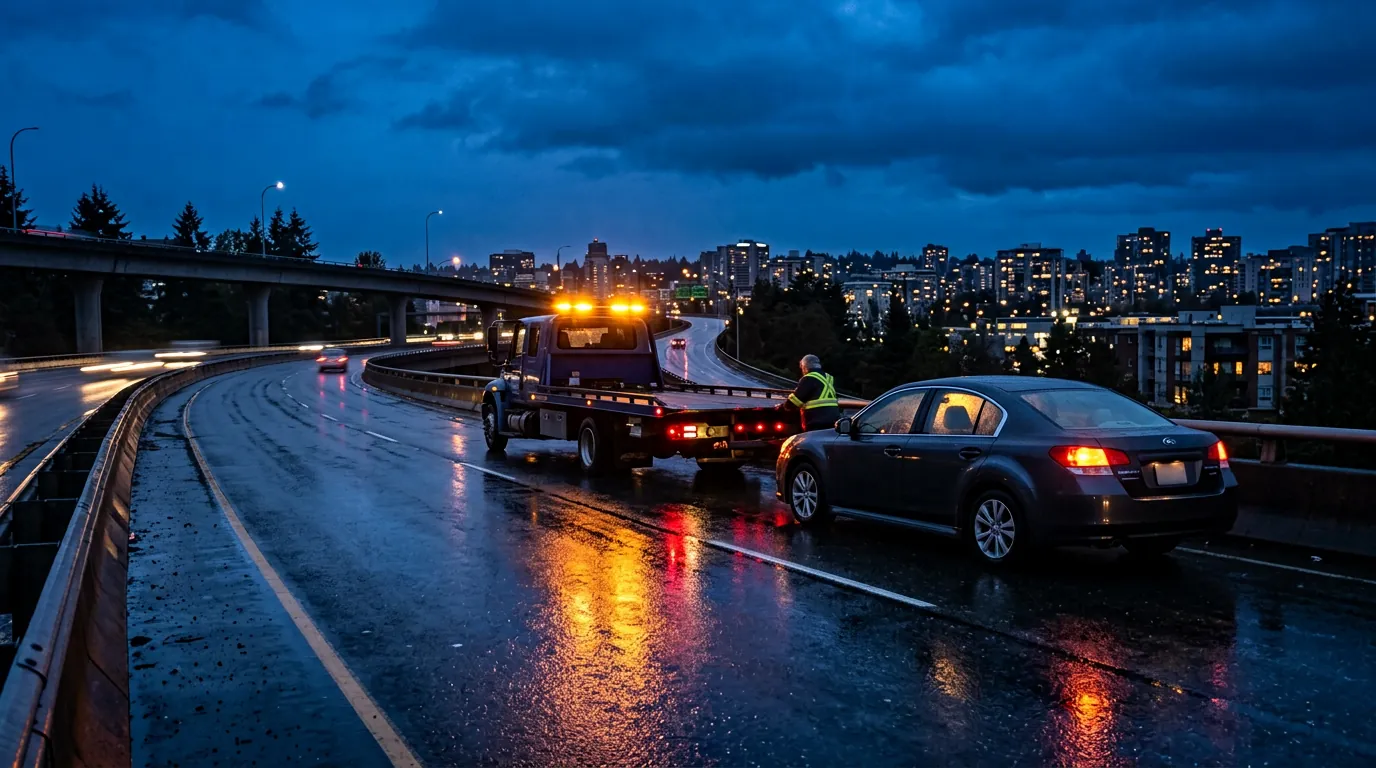
A towing dispatch answering service picks up your line when you can't: while your only driver is winching a car out of a ditch, at 2 a.m., or when five calls hit at once after the first snow. It gets the caller's location, vehicle and problem, tells you which calls are urgent, and sends the details to you right away so you can roll a truck or call back.
Why towing is a hard business to answer the phone for
Towing has the worst mix for phone coverage: nonstop demand, calls that can't wait, and owners who are usually behind the wheel.
The demand is real. AAA alone answered over 27 million roadside calls in 2024, including roughly 13 million tows and about 7 million battery calls. That's one motor club. Add police rotation, private property, accident scenes, repair shop transfers and people who just search "tow truck near me," and the phone at a small tow company rarely goes quiet.
The timing is worst-case too. Calls bunch up in bad weather, on holiday weekends and at rush hour, exactly when every truck is already out. During the 2024 year-end holidays, AAA responded to more than 71,000 roadside calls in Northern California alone, mostly for dead batteries, flat tires and empty tanks.
And the person who'd normally answer is often standing on a highway shoulder. AAA has reported that about 24 emergency responders, including tow providers, are struck and killed while working at the roadside each year. No call is worth answering while you're hooking up a car next to live traffic.
A stranded driver doesn't leave a voicemail and wait, either. They call the next number on Google.
The calls a tow company actually gets
A good towing dispatch answering service has to tell these apart, because they don't have the same urgency or the same value.
Emergency roadside and accident tows
Someone is broken down or just had a wreck. These are the calls that need a truck now. The service needs the exact location fast, whether the car is in a travel lane, and a callback number in case the call drops.
Light-duty service calls
Jump starts, lockouts, flat tire changes and fuel delivery. Quick jobs, often for a stressed caller in a parking lot. Many are ready to pay the minute they hear a price and an ETA.
Scheduled and non-emergency tows
A car that needs to go to the shop tomorrow, a vehicle bought out of state, a junk car pickup, equipment moves. Good money, no rush, and easy to lose if nobody gets the details.
Impound and release calls
"Where's my car?" "What do I need to bring?" "What are your hours?" These calls are often tense and repetitive. A service that answers them from your own information (lot address, release hours, accepted payment, required documents) takes a lot of pressure off you.
Price shoppers
"How much to tow a car 10 miles?" For reference, AAA Club Alliance tells consumers that a short 5-mile tow typically costs $75 to $150 without a membership. If you share a hook-up fee and per-mile rate, the service can give it. If not, it should take the details and promise a callback.
What every towing call needs to capture
Use this as your intake script, whether a person or an AI is answering:
| Field | Why it matters |
|---|---|
| Caller name and callback number | Calls drop on highways. Get the number first. |
| Exact location | Street address, cross streets, highway and mile marker, direction of travel, nearest exit, or a landmark |
| Is anyone in danger or in a travel lane? | Decides whether this is a "call 911 first" situation |
| Vehicle year, make, model, color | Tells your driver what to look for |
| Drive type and condition | AWD, low clearance, won't roll, keys available, in park or stuck in gear |
| What happened | Breakdown, accident, lockout, dead battery, flat, out of gas |
| Where it's going | Home, a specific shop, your yard |
| Payment | Motor club or insurance, or paying directly |
| Police involvement | Accident report or a police-requested tow |
What a towing dispatch answering service should handle
Compare options against this checklist:
- Answers 24/7, every day of the year, including holidays and storms
- Answers with your company name and from your own information: service area, services, impound lot hours, release requirements
- Gets the location first and confirms it back to the caller
- Puts safety first: tells anyone in danger or in a travel lane to call 911
- Flags urgent calls separately from scheduled tows and impound questions
- Alerts you instantly by text or email so you can dispatch from the truck
- Handles several calls at once during a storm or a pileup
- Keeps a call log you can review and export, so nothing gets lost between shifts
- Lets your dispatcher and drivers in with their own logins
- Clear pricing for your real volume, including overage
Some features vary a lot between providers, and they matter more in towing than in most trades: live transfer of a call to an on-call driver, live dispatch (assigning drivers and tracking ETAs), integration with towing software like Towbook, texting the caller an ETA, and Spanish-language answering. If you need any of those, confirm them directly before you sign up.
Your options compared
| Voicemail | Live answering / dispatch service | AI receptionist | |
|---|---|---|---|
| Who answers | Nobody | A human agent | An AI voice using your business info |
| Storm surge | Records what it can | Can back up into hold queues | Answers calls at the same time |
| Answers questions about your company | No | From a script | Yes, from your own information |
| Collects location and vehicle details | Only if the caller leaves them | Yes | Yes |
| Live transfer or actual dispatching | No | Often available | Depends on provider |
| Typical pricing | Free | Per minute or per call | Monthly plan with included minutes |
If you want a person to assign drivers and track ETAs for you overnight, a live dispatch service is the better fit. If you dispatch yourself and mainly need every call answered and the details in your hand fast, an AI receptionist covers that for a lot less. Our guide to AI receptionists explains how they work and where they fall short.
How MorshedWorx Voice works for tow companies
MorshedWorx Voice is an AI receptionist for small service businesses, including independent tow and roadside operators. Your receptionist, Jessie, answers your calls 24/7 using the information you give her: your service area, the services you offer, your impound lot address and release hours, and any prices you choose to share, like a hook-up fee or lockout price.
On each call she collects the caller's details, location, vehicle and problem, captures callback requests, and live-transfers urgent calls to your on-call driver's phone (on every plan; Crew adds a backup number if the first driver doesn't pick up). On Pro and Crew she can book scheduled tows into her built-in calendar and answer in Spanish. Right after the call you get an alert by text or email: every call, important only, urgent only, or none. Everything lands in your online portal, where you can read and listen to recorded calls with transcripts, see callbacks and export them to CSV. Your dispatcher and drivers can have their own logins with different access levels.
What she doesn't do, and you should know this before you sign up: she doesn't dispatch trucks, track ETAs, text callers back or connect to towing software like Towbook. She answers, gets the details right and puts the call through or gets the details to you in seconds. You or your on-call driver roll the truck.
Here's how a demo call sounds (illustrative example):
Jessie: Thanks for calling Ridgeline Towing, this is Jessie. How can I help? Caller: My car just died. I'm on Route 1 heading north. Jessie: I'm sorry, let's get you help. First, are you and your passengers safe and off the road? If anyone is in danger or the car is in a travel lane, please hang up and call 911. Caller: We're on the shoulder, we're okay. Jessie: Good. What's the best number to reach you if we get cut off? Caller: 207-555-0143. Jessie: Thanks. Where exactly are you? A cross street, exit or landmark helps. Caller: Just past the gas station near the Scarborough line. Jessie: Got it. What's the vehicle, and do you know where you'd like it towed? Caller: Gray 2016 Subaru Outback. To Coastal Auto on Main. Jessie: Since it's all-wheel drive, we'll send a flatbed. I'm putting you through to our driver now so they can give you an ETA.
To hear it yourself, call (207) 309-2098, tell Jessie you run a towing company, and she'll answer as your receptionist.
What missed calls cost a tow company
Example: A two-truck operator averages $140 per tow and light-duty call.
- Calls missed per week while both drivers are on jobs: 8
- Share that call a competitor instead: most of them, say 6
- Lost jobs per month: about 24
- Revenue at stake per month: about $3,360
Plug in your own numbers; our post on what missed calls really cost walks through the method.
For comparison, MorshedWorx Voice plans start at $97/month (Solo, 150 minutes), with Pro at $197 (500 minutes) and Crew at $347 (1,200 minutes). Towing calls are short, but they come in volume, so most busy operators will want Pro or Crew. Yearly billing gets two months free, and overage is $0.25, $0.20 or $0.18 per minute depending on plan. See the pricing page for details.
Setup is a free 10-minute wizard, or done-for-you for a one-time $197 (included with Crew). There's also a new-customer guarantee: if you don't get at least one new customer within 30 days of going live, your first month is refunded.
Set it up so urgent calls never wait
- Write down your basics. Service area, services (light-duty, flatbed, heavy, lockouts, jump starts), impound lot address and release hours, documents needed for release, and any prices you'll quote.
- Define "urgent" clearly. Breakdowns and accidents with someone waiting are urgent. Impound questions and next-day tows are not.
- Set alerts by shift. Urgent-only to the on-call driver overnight, every call to the office during the day.
- Forward your number. Most tow operators forward unanswered calls during the day and all calls overnight. Our after-hours answering guide covers the options.
- Test it like a stranded driver would. Call from the side of a real road. Give a vague location and see if the details come through clearly.
FAQ
Can an answering service dispatch my trucks?
Some live dispatch services can assign drivers and track ETAs. MorshedWorx Voice doesn't dispatch; it answers, captures the location and vehicle details, transfers urgent calls to your on-call driver and alerts you instantly so you can dispatch.
What happens if a caller is in danger?
A good service tells callers who are hurt, in danger or stopped in a travel lane to call 911 first. Your tow company is not an emergency service, and your script should say so.
Can it answer impound and release questions?
Yes, if you give it the facts: lot address, release hours, what ID and paperwork are needed and how you take payment. These are some of the most repetitive calls a tow company gets.
Will it work with motor club calls?
Motor club jobs usually come through the club's own dispatch system, not your phone line. An answering service handles the calls that come to your number: direct customers, shops, police-requested tows and impound questions.
Can I keep my current number?
Yes. You forward calls from your existing number, so the number on your trucks, website and Google profile stays the same.
Hear Jessie answer as your tow company
The fastest way to judge it is to hear it. Call Jessie at (207) 309-2098, tell her you run a towing company, and play a stranded driver. When you're ready, see pricing and get every call covered before the next storm.
We build MorshedWorx Voice, the AI receptionist for local service businesses, and help owners answer every call and win more jobs. MorshedWorx is based in Maine.
Hear Jessie answer as your business.
- Answers 24/7 from your own services, prices and hours
- Puts real emergencies straight through to your phone
- Books the job, filters spam, and texts you a summary
- 01Call the demo line from any phone
- 02Tell her your type of business
- 03Ask what your customers ask
- 04Live in about 10 minutes, keep your number
Related reading

Answering Service for Gyms and Fitness Studios
Your coaches are on the floor and your front desk is checking people in when the phone rings. Here's how a gym answering service covers those calls, from trial-class questions to cancellation requests.

Answering Service for Wedding and Event Businesses
Couples call while you're running someone else's wedding. Here's how venues, photographers, planners and other wedding pros can answer every inquiry without stepping off the floor.

Answering Service for Pet Groomers and Boarding
Your phone rings when you're holding a wet, wiggling dog. Here's what a pet grooming answering service should handle for groomers and boarding facilities, and how to pick one.