Veterinary Answering Service
Vet clinics get a mix of routine booking calls and genuinely scary ones from worried pet owners. Here's what a veterinary answering service should do with each, what it costs, and how to pick one.

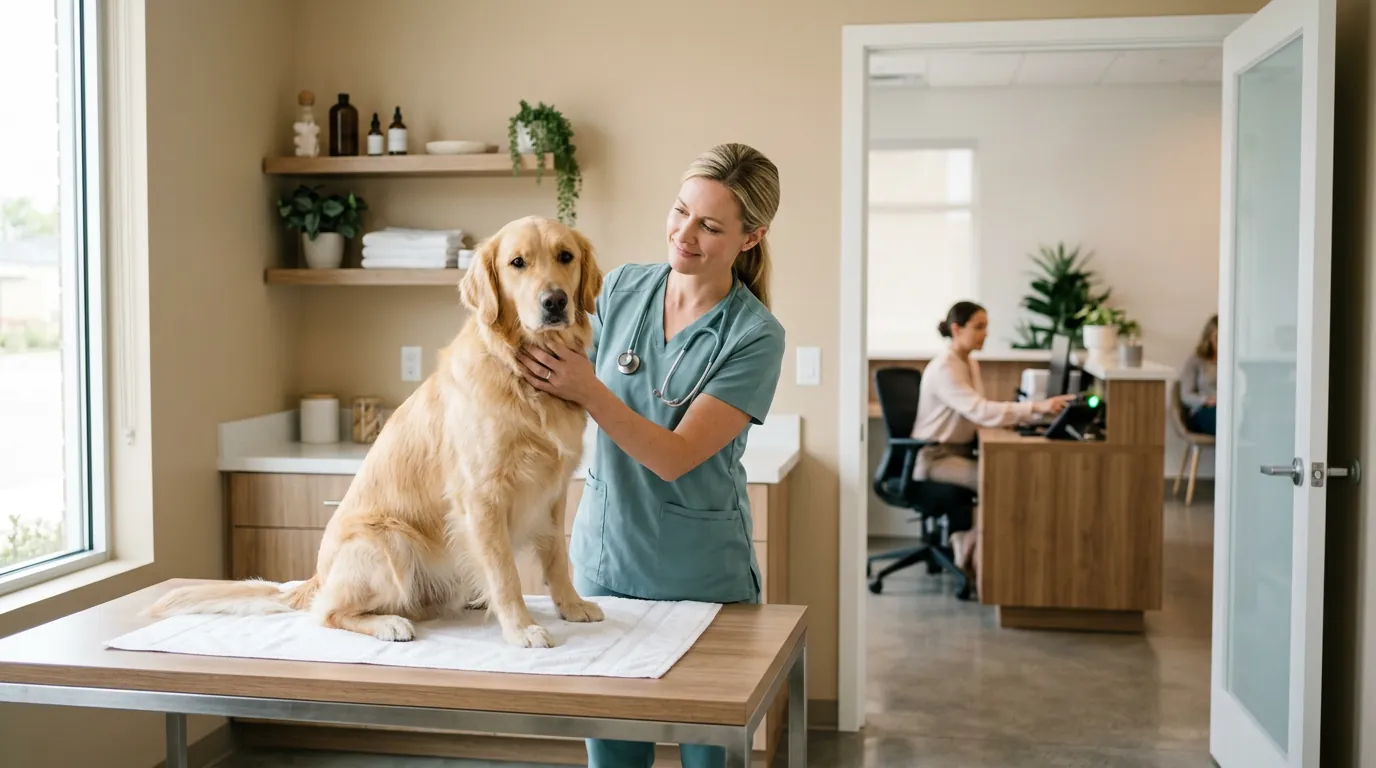
A veterinary answering service picks up your clinic's calls when your front desk can't: during the morning rush, at lunch, overnight and on weekends. A good one tells a routine "can I book Bella's shots?" apart from a "my dog just ate a bag of chocolate" call, points emergencies to the right place fast, and gives your team a clean list of callbacks in the morning. This guide covers what a veterinary answering service should handle, how to set up after-hours triage, what it costs, and how to choose one.
Why vet clinics miss so many calls
Your front desk is checking patients in, taking payments, answering questions at the counter and holding a cat carrier, all while the phone rings. Something gives, and it's usually the phone.
- A lot of calls go unanswered. In Today's Veterinary Business, veterinarian William Tancredi reported that 25% to 30% of calls to small and medium veterinary clinics go unanswered, citing data from a call-handling company that partners on the article. Treat it as a ballpark, then check your own phone logs.
- There are a lot of pets. The American Pet Products Association reports 94 million US households own at least one pet, up from 82 million in 2023.
- Emergencies don't keep clinic hours. The ASPCA Animal Poison Control Center responded to more than 451,000 calls in 2024, and its line is open 24 hours a day, every day of the year. Pet owners panic at 10 p.m. as often as at 10 a.m.
- Vets work long hours already. BLS notes that some veterinarians work nights or weekends and may have to respond to emergencies outside scheduled hours. Answering every after-hours call personally isn't sustainable.
What a veterinary answering service should do
1. Answer every call, every hour
Daytime overflow matters as much as after-hours. If your desk is slammed from 8 to 10 a.m., the service should catch the calls your team can't, not just the ones after you lock up.
2. Triage: emergency, urgent, or routine
This is where veterinary calls differ from almost any other business. The service shouldn't diagnose anything. It should ask a few clear questions and route the call correctly.
| Caller says | Category | What should happen |
|---|---|---|
| Hit by a car, not breathing, seizing, bleeding heavily | Emergency | Give the emergency hospital's name and number right away; flag the call urgent |
| Ate something toxic (chocolate, medication, rat bait, xylitol) | Emergency | Give the emergency hospital and the ASPCA Animal Poison Control number; flag urgent |
| Straining to urinate (especially male cats), bloated belly, repeated unproductive vomiting | Emergency | Same as above; these can't wait for morning |
| Vomited once, eating normally, acting fine | Urgent or next day | Take details, flag for a callback first thing |
| Wants to book vaccines, a dental or a wellness exam | Routine | Take the appointment request with preferred times |
| Prescription refill or food order | Routine | Take pet name, owner name, medication, pharmacy or pickup preference |
| Asking hours, location, whether you see exotics | Information | Answer from your clinic info |
Your veterinarians should decide which signs count as emergencies. Write that list down and give it to whatever service you use.
3. Know where to send emergencies
Most general practices don't see emergencies overnight. The answering service needs your referral info on hand:
- Your local 24-hour emergency hospital: name, address and phone
- The ASPCA Animal Poison Control Center: (888) 426-4435 (the ASPCA notes a consultation fee may apply)
- Whether any of your doctors take on-call emergencies, and how to reach them
Knowing what owners face also helps your team set expectations. CareCredit's national figures put the average emergency exam at about $135 for dogs and $143 for cats, before diagnostics or treatment. And an ASPCA report in March 2026 found six in ten pet owners lack confidence they could pay for a pet emergency. Callers asking "how much will this cost?" are common, and the service should know what you want said.
4. Capture complete, usable details
Every message should include:
- Owner's name and best callback number
- Pet's name, species, breed and approximate age
- Whether they're an existing client
- What's going on, in the caller's words
- When it started
- Preferred appointment times, for booking requests
Missing a callback number is the most common and most frustrating failure. Check that the service confirms it on every call.
5. Get alerts to the right person fast
Urgent calls should reach you or your on-call doctor right away, by text. Routine ones can wait in an email or portal list for the morning. Ask exactly how fast urgent alerts arrive and whether you can choose who gets what.
6. Know your seasonal spikes
Vet call volume isn't flat. Fireworks are a classic one: the American Humane Association has said "July 5th is the busiest day of the year at animal shelters", as cited by the City of St. Louis. Holidays bring food and decoration ingestions; chocolate alone was 13.6% of the exposures ASPCA Poison Control handled in 2025. Make sure your answering service's holiday coverage and greeting are ready before the spike, not after.
Do veterinary answering services need to be HIPAA compliant?
This is general information, not legal advice.
Generally, no. HIPAA protects health information about people. The federal definition of a "person" is "a natural person (meaning a human being who is born alive)", and the HIPAA Journal explains that veterinary records generally fall outside HIPAA.
That doesn't mean anything goes. Many states have their own confidentiality rules for veterinary records. California, for example, bars veterinarians from disclosing information about an animal, its owner or its care without the owner's consent, with exceptions such as treatment, payment and disclosures required by law (Business and Professions Code section 4857, as summarized by HIPAA Journal). The AVMA also publishes voluntary data stewardship principles.
Practical takeaways:
- Check your state's veterinary practice act and board rules on record confidentiality.
- Ask any answering service how it stores call data, who can access it, and whether you can export or delete it.
- Give the service only the information it needs to answer calls. It doesn't need medical records.
- One exception to watch: if your practice also handles human health information (for example, documentation for a person's service animal mixed in with their own health records), talk to a lawyer about whether HIPAA applies to that part.
Your options and what they cost
| Option | How it works | Typical cost | Best for |
|---|---|---|---|
| In-house staff | Your team answers; voicemail after hours | Wages and benefits; BLS puts the median receptionist wage at $18.27/hour | Daytime calls when you have enough staff |
| Live answering service | Call-center agents follow your script | Usually priced per minute or per call; see each provider's pricing page | Clinics that want live transfers to an on-call vet or bilingual answering |
| Veterinary triage service | Licensed staff give medical guidance by phone | Varies; ask for a quote | Practices that want clinical advice given after hours |
| AI receptionist | Software answers from your clinic info and sends you summaries | Flat monthly plans; MorshedWorx Voice starts at $97/month | Overflow and after-hours coverage on a predictable budget |
New to AI receptionists? Our guide What Is an AI Receptionist? explains how they work, and the after-hours answering service guide covers night and weekend coverage for any business.
How MorshedWorx Voice works for a vet clinic
MorshedWorx Voice is an AI receptionist named Jessie. For a clinic, setup looks like this:
- Keep your number. Forward calls (all, or just unanswered and after-hours) to the number we give you.
- Add your clinic info. Hours, services, species you see, location, new-client policy, and your after-hours emergency referral and the poison control number, so Jessie can share them with callers.
- Define urgent. Use your doctors' list of emergency signs. Jessie asks questions and flags matching calls as urgent. On every plan you can also have her put real emergencies straight through to your on-call vet; if nobody picks up, she takes the details and marks an urgent callback.
- Choose alerts. Text or email for every call, important only, urgent only, or none. Your team sees calls, callbacks and appointment requests in the online portal, and you can add managers and staff with different access levels.
Every call is recorded with a transcript you can review in the portal. On Pro and Crew, Jessie can also book visits into her built-in calendar and answer in English or Spanish. Here's what Jessie does not do, so you can decide if it fits: she doesn't give medical advice, text callers back, or book directly into your practice management software. If you need any of those, look for them specifically in another service.
Here's how a demo call might sound (example):
Jessie: Thanks for calling Riverside Animal Clinic, this is Jessie. How can I help?
Caller: My lab just got into a box of chocolates. I think he ate most of it.
Jessie: I'm sorry, that sounds scary. Since we're closed right now, please call Coastal Emergency Vet at (555) 010-0199, they're open all night. You can also call the ASPCA Animal Poison Control Center at (888) 426-4435. Can I get your name, your dog's name and your number so the clinic can follow up?
Caller: Dana Price, the dog's Murphy, 555-0142.
Jessie: Thanks, Dana. I've marked this as urgent for the team. Please call the emergency clinic now.
(Clinic names and numbers in this example are made up.)
The clinic gets a text alert, and the morning team sees the full note in the portal.
Pricing: Solo is $97/month for 150 minutes, Pro is $197 for 500 and Crew is $347 for 1,200. Setup is free and self-serve, or $197 one time done for you (included with Crew). If you run more than one location, each extra business is 20% off under one login. See pricing for details.
Checklist: choosing a veterinary answering service
- Answers 24/7, including holidays, with no surprise surcharges
- Follows your emergency list and never gives medical advice unless it's a licensed triage service
- Shares your emergency hospital and poison control info with callers
- Confirms the callback number on every call
- Urgent alerts by text within minutes
- Explains how call data is stored and who can see it
- Lets you keep your existing number
- Predictable pricing in your busiest month
- Lets you place a test call as a panicked pet owner before you buy
Veterinary answering service FAQ
How much does a veterinary answering service cost?
It depends on the type. Live services usually charge per minute or per call, and clinical triage services quote separately. AI receptionists usually charge a flat monthly fee; MorshedWorx Voice starts at $97/month for 150 minutes.
Can an answering service give medical advice to pet owners?
Only a service staffed by licensed veterinary professionals should. A general answering service or AI receptionist should take details, share your emergency referral information and flag urgent calls, not advise on treatment. Jessie doesn't give medical advice.
Does HIPAA apply to veterinary clinics?
Generally not, because HIPAA covers human health information. State veterinary confidentiality laws still apply, so check your state's rules. This is general information, not legal advice.
Can it handle calls during the day, not just after hours?
Yes. You can forward only unanswered calls, so Jessie picks up when your desk is busy and your team still answers when they can.
Will clients be upset talking to an AI?
Some will prefer a person, and that's fair. Compare it to what happens now when the line is busy or it's after hours. Call the demo line and judge for yourself.
Hear Jessie answer as your clinic
Call Jessie at (207) 309-2098, tell her you run a veterinary clinic, and play a worried pet owner. You'll hear exactly what your clients would. If you don't get at least one new client within 30 days of going live, your first month is refunded. When you're ready, see pricing.
We build MorshedWorx Voice, the AI receptionist for local service businesses, and help owners answer every call and win more jobs. MorshedWorx is based in Maine.
Hear Jessie answer as your business.
- Answers 24/7 from your own services, prices and hours
- Puts real emergencies straight through to your phone
- Books the job, filters spam, and texts you a summary
- 01Call the demo line from any phone
- 02Tell her your type of business
- 03Ask what your customers ask
- 04Live in about 10 minutes, keep your number
Related reading

Answering Service for Gyms and Fitness Studios
Your coaches are on the floor and your front desk is checking people in when the phone rings. Here's how a gym answering service covers those calls, from trial-class questions to cancellation requests.

Answering Service for Wedding and Event Businesses
Couples call while you're running someone else's wedding. Here's how venues, photographers, planners and other wedding pros can answer every inquiry without stepping off the floor.

Answering Service for Pet Groomers and Boarding
Your phone rings when you're holding a wet, wiggling dog. Here's what a pet grooming answering service should handle for groomers and boarding facilities, and how to pick one.